
The Portato
Riemann’s Lexicon defines portato briefly and concisely. “Portato (Italian) demands ‘broad,’ sustained execution, but the notes should not be joined together (cf. legato), so it is by no means the same as portamento.”
This explanation is not enough for the string player; therefore we should add the following.
Most importantly: portamento is primarily concerned with the left hand (other than the need to make a diminuendo with the bow), while portato is exclusively concerned with the bow. When two tones must be connected with a slide, we speak of portamento; when the tones should be separated from one another, we should use portato. The notes should be held apart from each other through small dynamic interruptions in the continuity of bow movement. We “carry” the bow from note to note, so to speak.
Portato is only for use in cantilena. Its graphic representation looks like this:
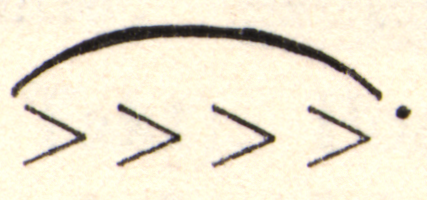
We often need them in connection with a small rubato on a “turn” figure:

We can also find portato passages in the fourth and fifth measures of the second theme of the Lalo Concerto (as we saw in the chapter on portamento).
We must make the point that it is a bad habit to use portato too frequently, or thoughtlessly. It is not suitable for a melody in a sublime, grand style; its domain should be the tender, light, and yearning.
I have heard cellists who, over the course of an entire evening’s recital, “seasoned” each group of notes to be played on a longer bow with the intended ingredient—but the seasoning did not remain a mere addition; it was, as it seemed to me, the main course! Such players eventually get to the point where they can no longer produce a longer tone without a swell and decay—a habit we should condemn because it is ugly, and because it is tiresome to the listener.
At this point, it should be said: all exaggerations, wherever they may occur, be they in the area of vibrato, portamento, or portato, are a sign of intellectual poverty in the player. They usually arise from the fear of not achieving recognition without “over-the-top” performances, overlooking the fact that any exaggeration can easily take on a tinge of the grotesque.